
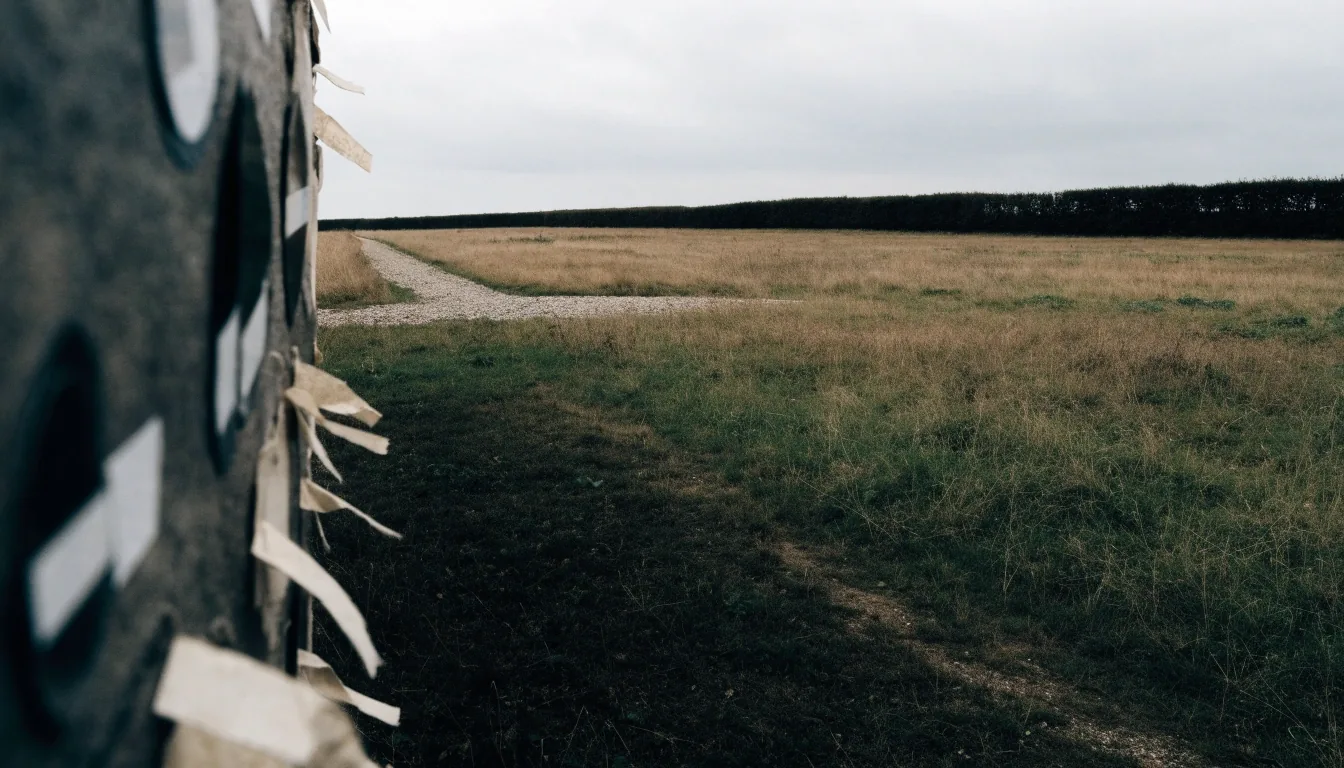
Open meadow at the edge of Maring-Noviand with a gravel path and hedgerow on the horizon

Timeline

Every project date we can source, in order

Facts dated. Positions named. Sources open. The record below runs oldest to newest, and every entry carries a label and a link to what supports it.

Confirmed

A responsible body stated it in writing. The entry links to that document or minute.

Planned

A document proposes it. Dates here are intentions, not decisions, and drafts change.

Association position

The association argues it, adopted at a general meeting and minuted. The minute is linked.

The record

How to read a timeline entry

The timeline lists dated entries for the Maring-Noviand Gewerbepark discussion, sorted oldest to newest. Each entry carries a label: confirmed, planned, or association position.

A typical entry shows a date, a one-line description, the label, and a link to the supporting document or the meeting minute. Where a document has a version number, the version is given, because drafts change.

Where an event is known only from local press and not from an official document, the entry says so. That is the difference between reading a record and reading a summary — and it is why the label sits with every date here rather than at the top of the page.

Why the dates matter

Planning arguments turn on sequence: what was known when, and what was decided before the public was told.

Putting entries in date order makes that sequence visible. It also settles a common problem, where a draft from one year is quoted as if it were the current state of the project. If you find a date here that does not match your own copy of a document, tell us, and we will compare versions in public.

Earliest discussion

From a conversation to an agenda item

The earliest entries cover the point at which a commercial zone near Maring-Noviand entered local discussion. In this period most entries are marked planned, because proposals and informal talks dominate and formal decisions are rare. We include them anyway: the record of how an idea moved from conversation to document is useful later, when someone asks why the project appeared on an agenda at all.

  1. 14 Mar 2021

    Planned

    First informal mention of a commercial zone near the village edge

    The first suggestion appears in a local session as a remark rather than a proposal — no boundary drawn, no size named. The entry is kept as planned because nothing was filed. Source: our own note from the public session, recorded by the association.

    Source: association meeting note, session minutes of 14 March 2021

  2. 07 Nov 2021

    Association position

    The association asks for a written statement on the site's intended extent

    Rather than take a position for or against the idea at this stage, members adopted a request for the area's intended extent in writing, so that discussion could proceed from a fixed reference instead of a verbal sketch.

    Source: association minute, general meeting 7 November 2021

  3. 22 Jun 2022

    Planned

    A draft concept paper circulates with two alternative boundaries

    The draft carries two site options side by side and no recommendation between them. It is logged as planned; nothing in it had been adopted. Version noted at the time of filing, because later drafts rearranged the same two options.

    Source: draft concept paper, version dated 22 June 2022

Formal planning steps

Where the record switches from talk to filing

Once the project entered formal procedures, entries shift toward confirmed. Filings, published agendas, consultation notices, and written responses to questions appear here with their reference numbers where available. This is the section to check if you need to know whether a step has officially happened, as opposed to being expected. Where an expected step has not yet appeared in the record, the timeline shows the entry as pending with the date we last checked.

15 Feb 2023

Confirmed

Formal filing received by the responsible authority

Logged with the reference number printed on the receipt. The entry is short because the filing itself is the document; the substance sits in the papers, not in our summary.

Source: filing receipt, February 2023
04 Sep 2023

Confirmed

Consultation notice published on the municipal agenda

The notice set the window in which comments could be submitted and named the office where a written question had to be sent. We logged the notice the day it appeared.

Source: published agenda, 4 September 2023

11 Jan 2024

Confirmed

Written response to the association's questions arrives

The reply answers part of what was asked and defers the rest to a later procedure. We keep the deferred items visible on the timeline rather than closing them quietly.

Source: written reply to questions, 11 January 2024

22 May 2024

Pending

Publication of the revised concept expected

Expected after the second consultation round. It had not appeared in the record when we last checked, so the entry stays open with the date of that check rather than a guessed date.

Last checked: 9 November 2026

03 Oct 2024

Planned

Site access and drainage works scheduled ahead of construction

Scheduled in a planning document as a precondition of any later work. Nothing in the file says these works have begun, so the date stands as an intention.

Source: planning document, October 2024

18 Feb 2025

Association position

Members ask for a single published boundary before any works start

Adopted by the general meeting and minuted. The reasoning is short: two boundaries in the file make it impossible for residents to know which line applies to their property.

Source: association minute, 18 February 2025

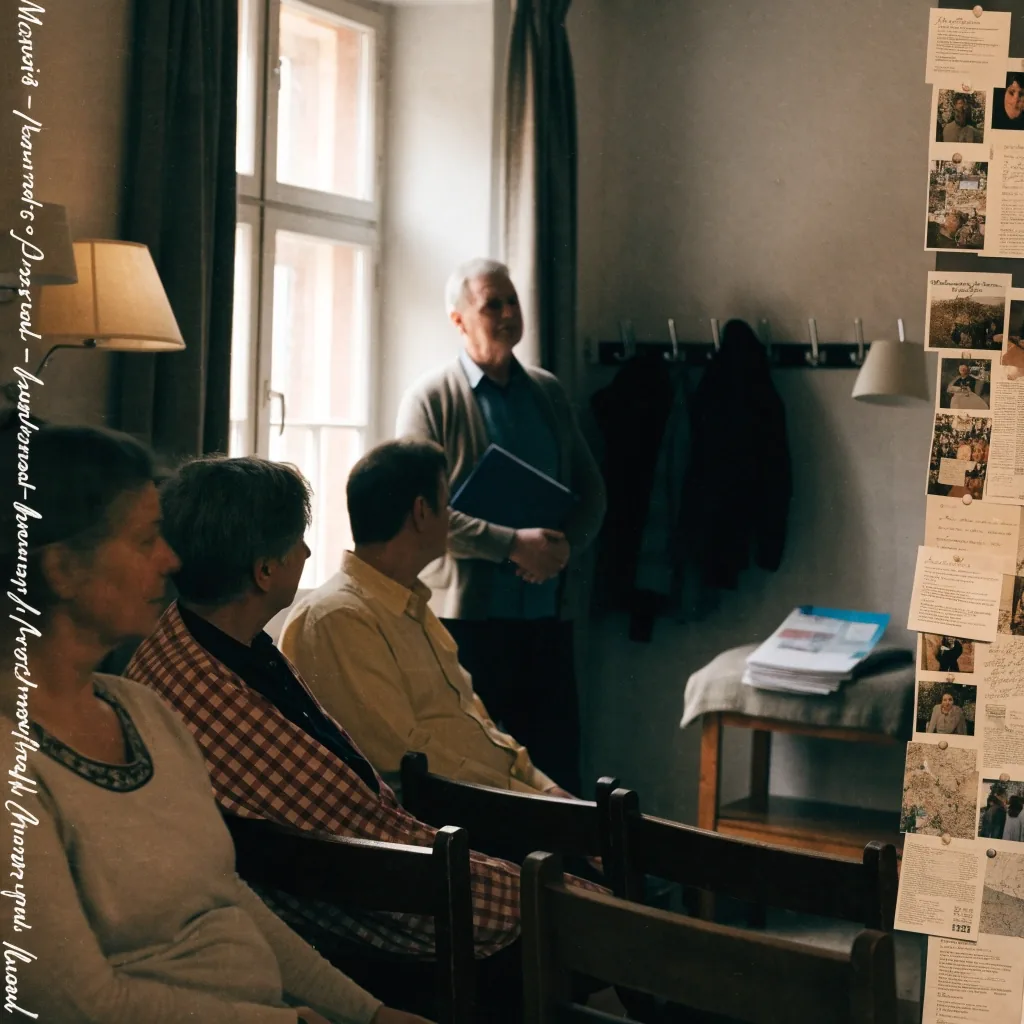
Residents at a public information evening in a village community hall beside a table of printed documents

Public meetings and participation

Who met, what was on the agenda, what was minuted

Records of public sessions, comment periods, and submissions belong here. Each entry notes who met, what was on the agenda, and what was minuted. Where the association submitted a written question or comment, that submission is logged as an association position and linked to the document archive. Meeting notes prepared by us rather than by the municipality are marked as such — an important distinction, because our note is a record of what we heard, not an official minute.

  • 12 Apr 2025 Public information evening in the village hall; the two boundary options are shown for the first time on a printed plan. Minutes published by the municipality.
  • 30 Jun 2025 Comment period closes. The association submits a written comment and files it in the document archive alongside the receipt.
  • 19 Sep 2025 Follow-up session on drainage and access. Our note from that evening is marked as an association record, because no official minute had appeared at the time of writing.

Association positions over time

When we said what

The association's own published positions are dated on the timeline too, so a reader can see when we said what. Positions are adopted at general meetings and minuted. If a later meeting revised an earlier position, both versions remain visible, with the revision noted. Moving an old position out of sight would make the record harder to audit, not cleaner.

An opened ring binder with tabbed dividers and punched paper on a plain table

07 Nov 2021

Request the intended extent in writing

Neutral at this stage. The association asked for a fixed written reference before taking a view.

18 Feb 2025

One published boundary before works begin

Adopted by the general meeting. Residents cannot be expected to argue against a line that has not been drawn once and for all.

14 Mar 2026

Revision: drainage findings tied to the boundary decision

The February 2025 position is revised, not replaced: the boundary demand stands, with the finding that drainage capacity changes which of the two options is workable. Both versions stay on this page.

Positions sit on the timeline the same way every other dated entry does. If a position is superseded, the newer one appears beside it rather than on top of it, so a reader comparing two years of minutes can see the shift for themselves.

Corrections and updates

Nothing is deleted silently

When an entry turns out to be wrong or a source is superseded, the correction is appended to the original entry with the date it was made. The correction log at the bottom of this page lists changes in reverse order, so you can see the history of the history.

  • 02 Oct 2026 The June 2022 entry corrected: the draft carried two boundary options, not three. An earlier draft with a third option was from a different working group and was never filed here.
  • 17 Jun 2026 Version number added to the February 2023 filing entry, after a reader compared two copies with different dates on the cover page.
  • 05 Feb 2026 Date corrected on the September 2025 follow-up session. The original entry used the date the invitation was sent, not the date of the meeting.

Reporting a gap or an error

Send us the date and the document

If you know of a dated event we have missed, send the date and the document to the association, or write to us directly at [email protected]. Attach a scan or a link if you have one.

We verify against the original where possible, and publish the entry with a source note. Where we cannot verify, we say what we could and could not confirm rather than dropping the item entirely — a missing date is easier to argue with than a missing record.

The association is registered as VR 42283 at Amtsgericht Wittlich. Our address is Im Webersgarten 25, 54484 Maring-Noviand, Germany; the project itself concerns land at the edge of the same village in the Bernkastel-Wittlich district.