
Planning filings and applications
Applications and submitted plan sets held by the responsible authority. The entry names the filing date, the issuing office, and whether a public copy exists.
Formal record
Documents and Sources
Every filing, agenda, reply and minute that stands behind this project is listed here with the day it carries and a link to the original where one exists. Where a paper copy is all we have, the entry says who issued it and when it reached us.
The archive
This is the working archive behind the rest of the site. Every document we cite appears here with a date, a short description, a document type, and a link to the original where one is available. If a source has gone offline or was never published digitally, the entry says so plainly.
The archive holds planning filings, published council agendas and decisions, written responses from administrative bodies, meeting minutes from the association, our own written submissions, and referenced press material. Documents we received on paper are described with the date we received them and the office that provided them.
Applications and submitted plan sets held by the responsible authority. The entry names the filing date, the issuing office, and whether a public copy exists.
Formal record
Published council agendas and adopted decisions, listed under the meeting date they belong to. Where a decision replaced an earlier one, both rows stay visible.
Formal record
Replies we received by letter or email from administrative bodies. The description states what was asked and what the reply actually answered.
Correspondence
Sketches and draft arrangements that circulated before any decision. These are proposals — the entry says so, so a draft is not mistaken for a commitment.
Proposal
Notes taken at our meetings and the written submissions we sent. Minutes record what we understood at the time; they are not an official transcript.
Association record
Local and regional reporting we quote from, each entry linked to the publication. Where we only had a press summary, the entry says that too.
Secondary source
Not every document carries the same authority. The archive labels each entry with its type so you can weigh it correctly, instead of treating a sketch and a decision as the same kind of paper.
Type
What it means
Authority
Filed application
Lodged with the authority and recorded there. Anyone can request it.
Formal record
Published decision
Adopted and published by the deciding body. It binds what happens next.
Formal record
Written reply
Answers a specific question. Read it for what it actually commits to, not for what it leaves open.
Correspondence
Draft layout
A proposal on paper. Useful for seeing intention; no weight of its own.
Proposal
Meeting notes
Our own record of what we understood, written up afterwards. Not an official transcript.
Association record
Press summary
Someone else's account of a document we could not obtain. We link to the article and say so.
Secondary source
Method
We prefer the original document or the publishing body's own copy. Where we only have a press summary, the entry says that and links to the press item. Where two versions of the same document exist, both are kept and the differences are noted in the description. We do not retype documents into our own words when the original text can be linked.
Council, authority or office — the publisher is named on the entry, so you know whose copy you are reading.
If a plan changed between drafts, the description names what moved and in which direction, rather than quietly overwriting the older file.
A dead link or an unpublished paper is recorded as such, with the office that held it and the date we asked.
Open questions
Some entries record a request rather than a result. If we asked a body for a document and the request was refused, delayed, or left unanswered, the archive shows the date of the request and the outcome. That record is useful: it tells future readers which questions were asked, when, and what happened next.
The body declined to release the document or told us where the request had to be filed. The entry keeps the date, the office and the ground it gave.
The reply arrived after the deadline for a comment had already passed. We record both dates, because the delay is part of what happened.
No reply came at all. The entry still stands in the archive, marked as an open request, so the question is not lost from the record.
Working with paper copies
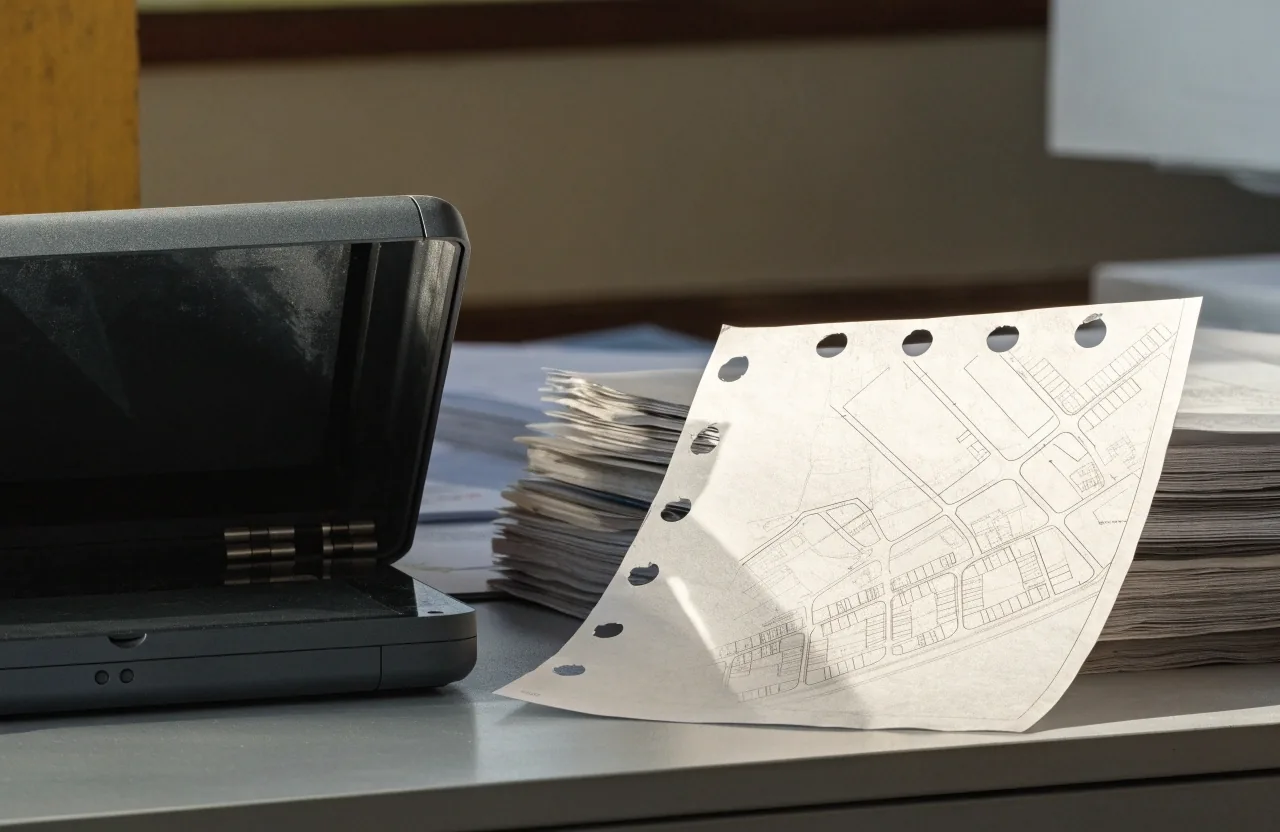
A portion of the material in this project circulates as printed agendas and handouts. For those, the archive entry gives the document title, the issuing office, the date on the document, and the date we obtained it. Where a paper copy has been scanned with permission, the entry links to the scan. Where permission was not granted, the entry describes the document without reproducing it.
If you hold a scanned copy you are entitled to keep, the archive is glad of it — a permitted scan is what turns a described entry into a readable one.
Revisions
Draft plans change. When we archive a version, we keep it and add the next version alongside rather than replacing the file silently.
The entry description notes which sections changed between versions, if the change is visible. This makes it possible to see when a figure or a route was altered and in which direction. That matters most when a number on a plan moves between two published versions.
Keeping both copies side by side means the change can be dated, quoted and checked by anyone reading the Maring-Noviand planning documents later.
An earlier version stays visible
The older row keeps its own date and description, so a citation can point at the exact version it relied on.
A change is named, not implied
Where the shift is visible on the sheet, the description says which part of the document moved.
Using the archive
Quote from the original where you can, and use our entries as a finding aid rather than as a substitute. Every entry is dated so a citation can include a version. If you are preparing a comment for a public consultation, the archive's agendas and filings section is the place to start, because those documents set out what the consultation is actually asking about.
When you cite an entry, name the document, the issuing office and the date it carries. Those three things are enough for another reader to find the same paper, whether it is online or still sitting in an office file.
Contribute
If you hold a document that belongs in this archive, send a description and, if possible, a scan or link to [email protected]. Include the date and who issued it. We check the item before adding it, and we credit the sender unless they ask us not to. Documents that cannot be verified are listed as unverified, with the reason stated.
What to include
The date printed on the document, and the date you received it.
The office or body that issued it, so the source is named on the entry.
A scan or a link if you have one, sent only where you are entitled to share it.