
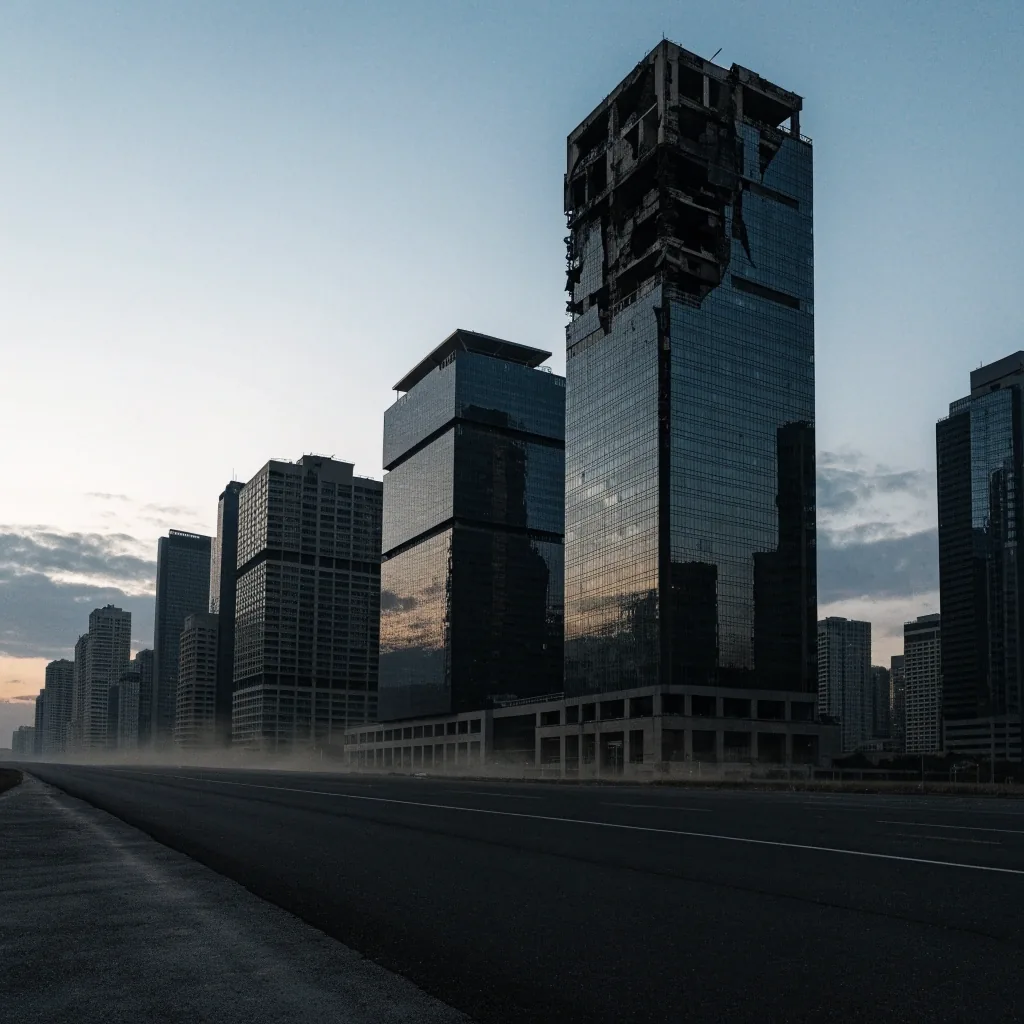
Aramco Tower hit in Riyadh during a fresh Houthi strike
BBC News reported that a building in the heart of the Saudi capital was struck, and BBC Verify said it authenticated footage of the damage in Riyadh's central financial district. Below: what the report states, how the footage was checked, and which details are still open.
What the report says
A hit in the capital, not on its outskirts
The account below is BBC's. Where a claim is theirs rather than ours, it is named as theirs — that is the rule this newsroom works to.
According to BBC News, the strike hit Aramco Tower, a building in central Riyadh. The report places the damage in the capital's financial district rather than on the city's outskirts — which is what gives the incident its weight. The account was carried in BBC's world news coverage on 7 November, and the outlet's reporting is the basis for this summary.
Central Riyadh, in the district that concentrates the city's offices and trading floors. The distinction matters: rough distance from the city core changes who is immediately affected, what kind of infrastructure is nearby, and how the incident is read by companies with staff and operations in the area.
7 November, carried in BBC's world news output; surfaced here on 8 November. The Association's news hub is in Maring-Noviand, Germany, and it republishes foreign coverage such as this as material with a date and a source rather than as its own reporting.
BBC News, whose world coverage the association links to at the foot of this page. The next item is the part of BBC's coverage that changes how a reader should treat the footage attached to it.
Sourced from BBC News world coverage. Where the original report is later updated or corrected, this page records the change with a new date rather than quietly editing the text.
How the footage was verified
A clip is not evidence until someone checks where it was filmed and when.
Who did the checking
BBC Verify is the broadcaster's open-source verification team. Their role is to establish whether a clip shows what someone claims it shows, before it enters a news report.
What that involves
Comparing footage against known locations, checking timestamps, and looking for inconsistencies inside the frame. A clip that fails any of those steps does not get treated as genuine.
Why it changes the reading
BBC Verify said it authenticated footage showing damage in Riyadh's central financial district. That step is why this page describes the footage as authenticated rather than simply circulating online.
Why the target's location matters
A financial district hit is read well outside the news cycle
A hit in the heart of the capital's financial district has effects beyond the building itself. Riyadh's financial area concentrates offices, trading floors, and staff, so an incident there touches business continuity and confidence alongside physical damage.
Reports of this kind are also read by insurers, logistics planners, and companies with staff in the city. For readers outside the region, the practical question is usually narrower than the headline: is my office, my shipment, or my cover exposed to this corridor — and does the reporting let me answer that?
The wider escalation
Repeated incidents ask different questions from a single event
The strike fits into a pattern of repeated missile and drone attacks in the region, as described in the same BBC coverage. BBC's report frames this strike as part of that broader sequence rather than as an isolated case.
Air defence performance over time
A sequence of strikes makes interception rates a moving figure rather than a single result. Readers can only compare reported interceptions against reported damage across incidents, not from one case.
The cost of interception
Intercepting a missile or drone draws on limited defensive stock. When launches repeat, the cost and the resupply question become part of the security picture, not a one-off expense.
Civilian infrastructure near targets
Where offices, housing and transport sit close to strategic sites, a strike in the area raises the risk of secondary effects even when the intended target is not the building that shows damage.
Regional security context
What reached through, and how often
Houthi missile and drone launches have been a recurring feature of the region's security picture, and Gulf states have invested heavily in air defence as a result. Coverage of an authenticated strike raises the question of what reached through, and how often that happens, because interception claims and visible damage do not always line up.
This is the part of the story that outsiders most often misread. A single strike can be described as either a defence failure or a defence success depending on which part of the picture is reported first — and the two accounts are not necessarily contradictory. What is missing from most single-day reporting is the baseline against which today's incident should be judged.
BBC's world news output is the primary source for this summary; treat anything you read elsewhere without a comparison point as unverified until you find one.
What remains unconfirmed
The gaps, named rather than filled
Sources for this report
Read the original before you rely on this summary
This summary draws on BBC News world coverage and the broadcaster's news homepage, both of which carried the item. Both links are below, with the date this page was compiled.
Compiled on
8 November 2026
Original report dated
7 November 2026
Published by
Bürgerinitiative PRO Gewerbepark MN e.V., Im Webersgarten 25, 54484 Maring-Noviand, Germany
Continue reading
Other dated items from the association's news hub
Europe · 7 November 2026
Ukraine reports a new wave of drone and missile explosions and injuries
Corroborated by wire reporting and named as such.
Middle East · 7 November 2026
Regional tensions rise after new strikes and diplomatic calls
The political reading of a week of military incidents.
Newsroom · Standing page
Editorial standards: how our material is dated, labelled and sourced
The rule this page was written by, in full.