
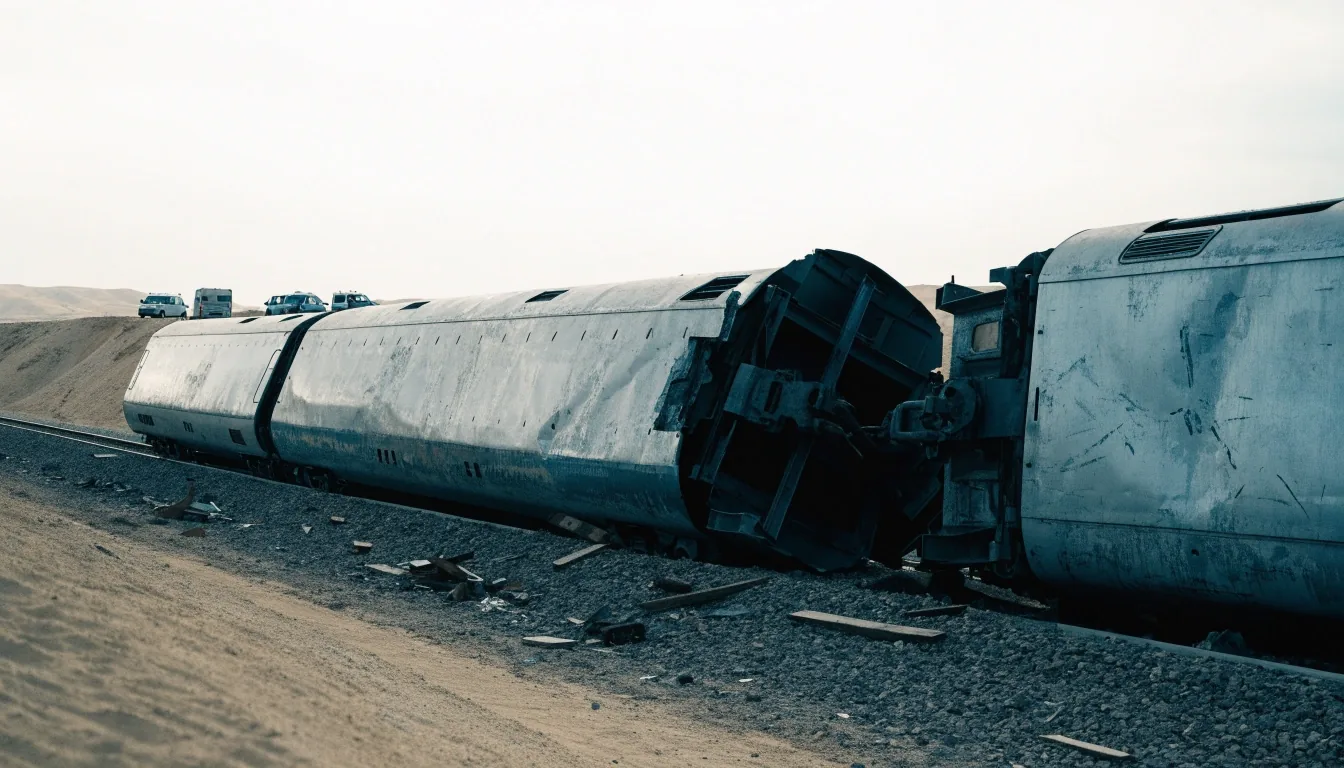
Egypt train collision south of Cairo kills at least seven
Two trains collided south of Cairo, and at least seven people were killed and at least 125 injured, according to authorities cited by the Associated Press. This page follows AP's account.
What happened
Reported 7 November 2026
AP reported that two trains collided south of Cairo. The location places the crash outside the capital itself, on a stretch of the national rail network rather than at one of the city's central stations. That distinction shapes how the story reads: this is an event on open track, between stops, where a collision involves trains already in motion.
Details of the sequence, including how the two trains came to be on the same track, are as described by the authorities cited in the agency's account. The report does not fill that sequence in beyond what those authorities stated, and this summary keeps the same line. Where the two trains were travelling from, how far apart the stations were, and what the track layout looks like at that point are all questions an accident report would normally answer — and at this stage, the sourced material does not answer them.
Egyptian rail accidents carry a particular weight because the network moves a very large number of passengers across long intercity distances, and the country's rail system has drawn scrutiny for years. That context is why a collision outside the capital becomes international news rather than a local bulletin. What follows on this page is the same incident read in parts: the casualties as reported, the emergency response, what the report does not establish, and where the account came from.
7
People killed, as a minimum. AP reported the figure as "at least seven" from the authorities it cited.
AP account, 7 November 2026
125
People injured, as a minimum. The count covers those authorities had recorded at the time of the account.
AP account, 7 November 2026
South of Cairo
The reported location: outside the capital, on a stretch of the national rail network rather than in a central station.
As described in the account
Casualties as reported
At least seven people were killed and at least 125 were injured, according to authorities cited by AP. The words "at least" matter here. Casualty figures from a large accident often change as hospitals report inward and identity confirmations proceed — sometimes upward, occasionally downward when a double count is corrected.
Numbers on this page remain as AP reported them. If the agencies revise their figures, this article will be amended with a note and a new date rather than quietly overwritten, so a reader can see what changed and when. Until then, the figures above are a floor, not a final count.
Why the count moves
Emergency departments report at different speeds, and confirming who was on which carriage takes longer than treating the injured. Early totals are almost always provisional.
Emergency response
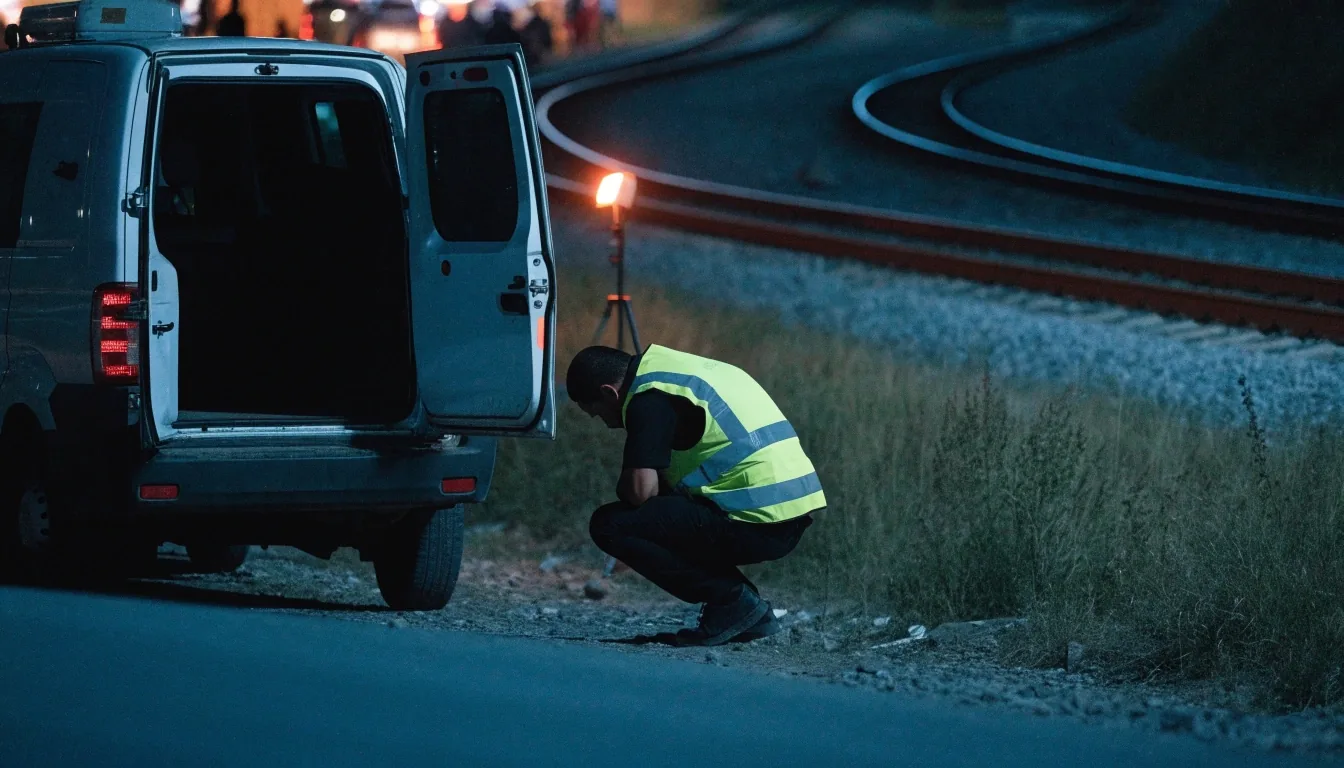
Accounts of large rail accidents typically describe ambulances, hospital transfers, and the suspension of services on the affected line. Where those details come from official statements, they are reported as such. Where they do not, they are absent.
We have not added operational detail that the sourced material does not contain. That means no invented numbers of ambulances, no assumed list of receiving hospitals, and no timings for when the line reopened — because none of those are in the accounts summarised here. A reader looking for the emergency response timeline will find it in the agencies' own reporting as it develops, through the links listed on this page.
What can be said plainly: a collision on open track of this scale draws a response that involves local medical services, the national rail operator, and usually a formal investigation body. Which of those issued statements, and what each said, is visible in the source material itself.
Rail safety in context
Egypt's rail network carries large passenger volumes, and serious accidents have occurred on it before. Coverage of this crash sits within that longer record — one reason the incident was carried among the day's major world news items.
Confirmed
Two trains collided south of Cairo on 7 November 2026, as reported by the Associated Press and carried in the BBC's world news coverage.
Reported by authorities
At least seven killed and at least 125 injured — the figures as cited by the authorities in AP's account, provisional by their own wording.
Not established
The cause of the collision. Investigations into rail collisions examine signalling, track condition and human factors, and conclusions take time. No official finding has been cited.
Outside this page
Comparisons with earlier Egyptian rail incidents require their own sourced figures. This page does not supply them, and it does not rank this crash against others.
What the report does not establish
AP's account does not, in the material summarised here, fix a cause. That is the normal condition of an accident reported within hours: the fact of the collision and the human cost are known, and the mechanism is not. Investigations into rail collisions examine signalling, track condition, and human factors, and conclusions take time.
Until an official finding is published, the cause remains open, and this page will say so rather than speculate. That is a deliberate choice, not a gap. A version of this page that confidently named a cause on the day of the crash would be the less useful one, because a reader would have no way to tell the sourced part from the guessed part.
The same rule applies to the questions a reader is most likely to ask next. Were the trains on the same line by a signalling failure, a track fault, or an error in movement authority? Was speed a factor on that stretch? Had any safety recommendation about this corridor been issued and acted on? Each of those needs a named official source before it belongs on a page like this one.
Sources for this report
This summary draws on AP's top stories video roundup for 7 November and on BBC's world news coverage, both of which carried the crash.
-
AP top stories video roundup, 7 November 2026 — the agency's own account of the collision and the casualty figures cited from authorities.
Associated Press -
BBC world news coverage of the same day — carried the crash inside a wider roundup of international stories.
BBC News
If the agencies update their figures, this article will be amended with a note and a new date. The two links above are the material this page was written from, and they are where a reader should go for the latest version of the account.
About this hub
Who keeps this record
This page belongs to the documentation work of the Bürgerinitiative PRO Gewerbepark MN e.V., a registered association based in Maring-Noviand, Germany. The association tracks infrastructure and land-use developments in and around the Maring-Noviand business park, and publishes dated, sourced updates so residents and members can see what is confirmed, what is planned, and where the association stands.
World news items are carried here for the same reason: they show how large public infrastructure projects and their safety records are discussed elsewhere, and how reporting separates fact from open question. The same standard applied to this page — dated, sourced, and honest about what is not yet known — is the standard the association applies to its own material.
Association details
- Registered association
- Bürgerinitiative PRO Gewerbepark MN e.V.
- Registration
- VR 42283, Amtsgericht Wittlich
- Address
- Im Webersgarten 25, 54484 Maring-Noviand, Germany
- Contact
- +49 6535 944430
[email protected]
Monday to Friday, 9:00 AM – 6:00 PM